You Don't Have to Be a Perfect Mom to Be a Good Mom: Understanding Postpartum Depression
By The Waiting Room
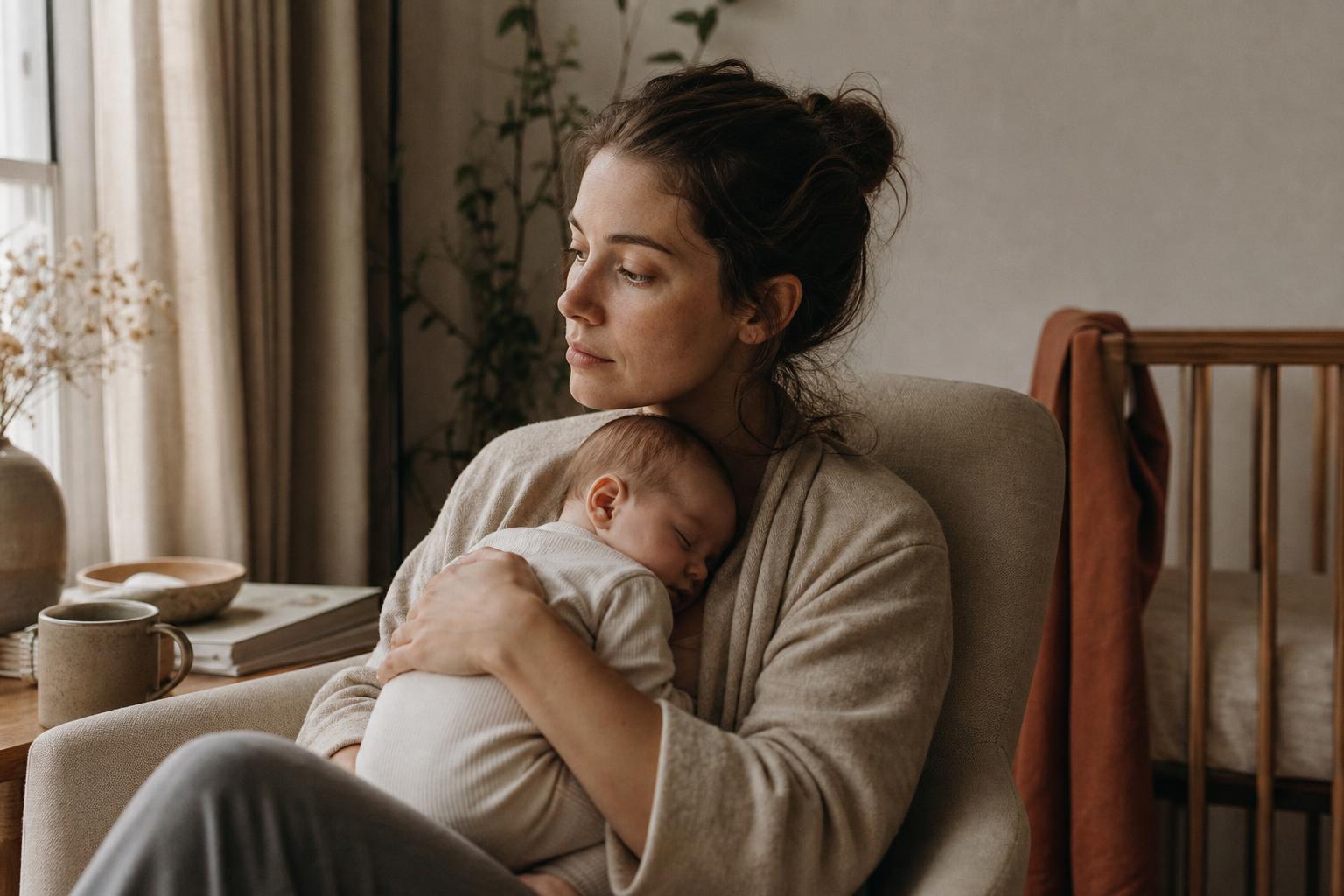
You imagined this season would feel different.
Maybe you pictured quiet moments holding your baby, feeling overwhelmed with love instead of overwhelmed, period. Instead, you're exhausted in a way sleep doesn't fix. You feel disconnected, guilty, numb, or like you're failing at the one thing you're supposed to know how to do instinctively.
If that's where you are right now: you're not broken, and you're not alone. What you're describing has a name, and it's far more common than most people talk about.
Postpartum Depression Doesn't Always Look Like Sadness
When people picture postpartum depression, they often picture constant crying. But for many new moms, it shows up differently:
- Feeling emotionally flat or numb, even around your baby
- Guilt for not feeling the way you think you "should"
- Irritability or a short fuse you don't recognize in yourself
- Trouble sleeping, even when the baby is finally asleep
- Intrusive, scary thoughts that show up uninvited
- A sense that you've lost the version of yourself you used to know
If any of this sounds familiar, it doesn't mean you love your baby any less. It means your nervous system, your hormones, and your entire identity are going through one of the biggest transitions a person can experience — and you deserve support through it.
Why You Feel Guilty for Struggling
So much of new motherhood comes wrapped in pressure: pressure to bond instantly, to bounce back, to feel grateful every second, to make it look easy. When you don't feel that way, guilt creeps in fast.
Here's the truth: struggling does not mean you're failing as a mother. It means you're human, navigating something enormous without a map. You don't need a diagnosis to deserve support — if something feels heavier than the usual exhaustion of new parenthood, that's reason enough to talk to someone.
You Don't Have to Have It All Figured Out
Healing from postpartum depression or anxiety doesn't happen all at once, and it doesn't require a perfect plan. Progress can look like:
- Building small routines — gentle rhythms that bring back a sense of steadiness, one day at a time
- Practicing self-compassion — softening the inner voice that tells you you're not doing enough
- Creating emotional space — giving yourself room to breathe, feel, and reconnect with the parts of yourself that went quiet
None of this requires you to be further along than you are right now. It just requires a place to start.
A Word for Partners
If you're a partner reading this on someone else's behalf: they may not know how to explain what they're feeling — only that they feel overwhelmed, distant, or emotionally exhausted. You don't need the right words either. Often, support starts simply with listening, patience, and making space for honest conversations, without trying to fix it right away.
You Don't Have to Go Through This Alone
Whether you're dealing with postpartum depression, postpartum anxiety, grief from fertility struggles, or just the quiet weight of losing yourself in motherhood — therapy can help you reconnect with who you are, without judgment and without shame.
If this resonates with you, we'd love to support you.
Book a free 15-minute consultation with Izabel — a therapist and mother who understands firsthand how isolating this season can feel.
No pressure. No waitlist. Just a conversation about what you need.
If you're in crisis or having thoughts of harming yourself or your baby, please reach out immediately to a crisis line, your doctor, or go to your nearest emergency room. You deserve support right away.
Or call The Waiting Room directly: (647) 325-3136 · info@thewaitingroom.ca